I Will Teach You to Be Rich Review: Is the Book Worth Reading?
A balanced review of Ramit Sethi’s I Will Teach You to Be Rich: its six-week structure, conscious spending ideas, strengths, limitations, and who it suits.
Nevlin team29 min read





On this page16 sections
Quick verdict
Worth considering for a beginner who wants to connect spending, saving, and everyday accounts into a routine. The strongest ideas are conscious spending and reducing repetitive decisions. The main limitations are U.S.-specific account details, an uneven motivational tone, and the need to check current terms. It is not a substitute for help with a financial emergency.
How this review was prepared
This is a research-based editorial assessment of the 2019 U.S. second edition, not a report of reading the complete book or completing its program. We examined the author's public introduction, first chapter, and contents, checked publisher and author material, and compared independent reviews. Discussion of later chapters describes their documented topics and evaluates the ideas; it is not a page-by-page assessment of those chapters.
It is Sunday night. You open your banking app, look at the balance, and try to remember what still needs to come out. Rent is covered. The credit card payment is coming. You meant to put something aside this month, but you are not quite sure what happened to that plan.
You have read the tips. You know saving matters. You also have a job, laundry, messages to answer, and dinner to make. Money keeps becoming a task for a quieter week.
This is the problem Ramit Sethi tackles in I Will Teach You to Be Rich. His book gives everyday money decisions a structure, with room for both future needs and a life you enjoy today.
The editorial verdict is positive, with important reservations. I Will Teach You to Be Rich is useful for beginners who want a clear way to organize their finances. Its strongest ideas are conscious spending, simple routines, and reducing the number of decisions that depend on willpower. Its weakest moments come when its confidence leaves too little room for financial hardship or different circumstances.
The title promises a lot. The useful question is what the book can realistically help someone change.
To explore that, imagine Megan, a fictional office coordinator in Columbus, Ohio. She earns a steady paycheck and usually covers her bills, but money feels scattered. She wants to visit her sister without putting the trip on a credit card. She would also like to stop feeling that every enjoyable purchase requires an explanation.
Her situation will help us look at what Sethi's ideas mean in an ordinary week.
What the book actually offers
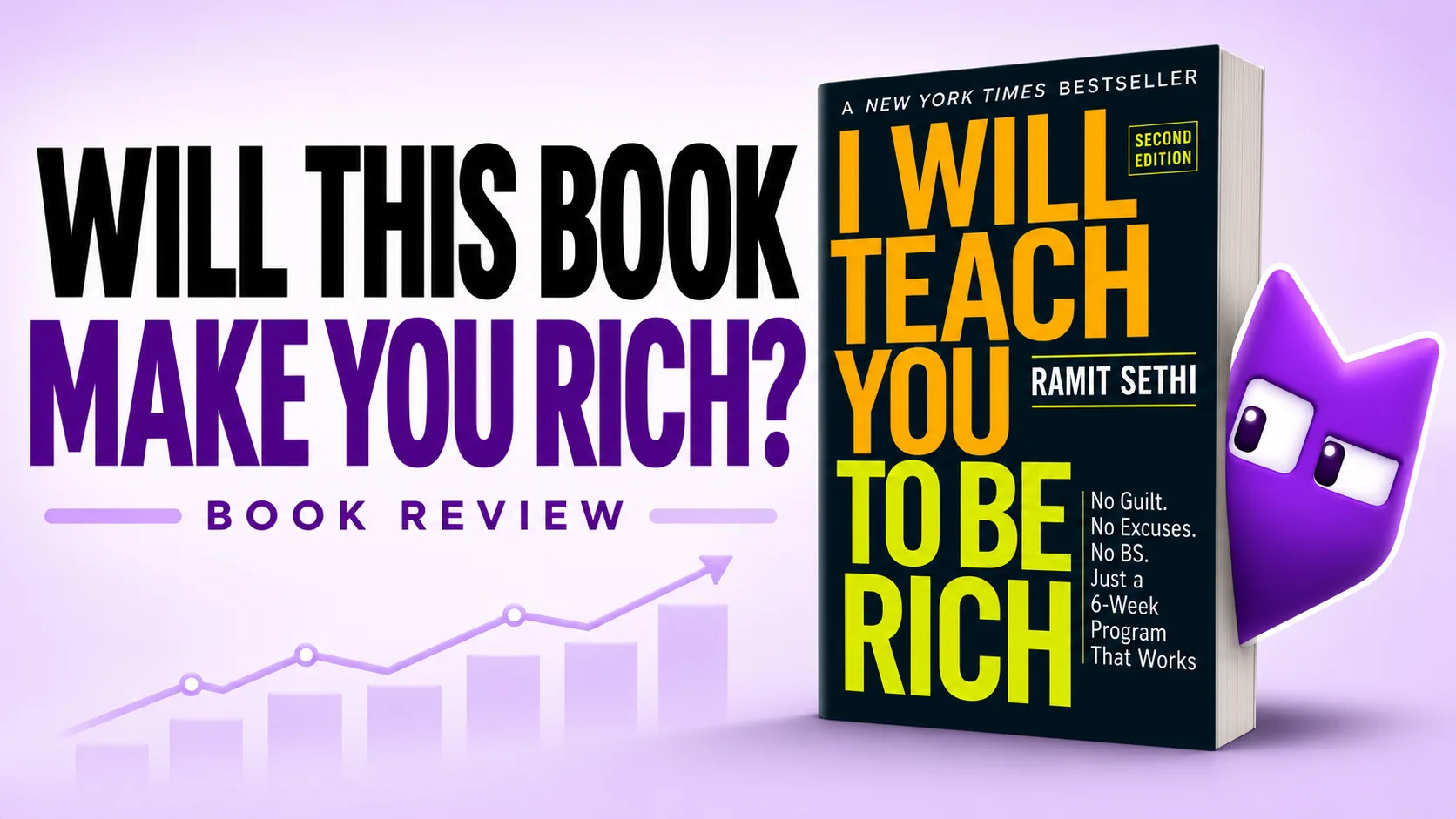
I Will Teach You to Be Rich is a personal finance book built around a six-week program. The first edition appeared in 2009. This review focuses on the second edition, published in 2019, which is the edition represented in the author's public sample. The publisher lists that edition as a 352-page book. Publisher's edition details.
The program moves through credit cards, banking, investment accounts, spending, automation, and investing. The book also covers maintaining the system and thinking through major purchases and relationships. Six weeks describes the proposed setup schedule. It does not describe how long it takes to become wealthy.
That distinction matters because the title can make the book sound like a promise of rapid transformation. The actual structure involves fairly ordinary work: understanding accounts, looking at costs, deciding where money should go, and making those decisions easier to repeat.
Sethi writes in a casual, sometimes confrontational voice. He uses jokes, personal stories, scripts for difficult conversations, and action steps. Readers who find finance books stiff may welcome that energy. Readers who dislike being challenged or teased may find parts of it tiring.
The opening of the second edition also admits that the original book needed more attention to emotions and more room for different paths. That is a useful admission. A set of account instructions can explain where money goes while leaving unanswered why someone avoids looking at it.
The book works best as a guided introduction to building habits and understanding everyday decisions. It has less to offer someone who already has a clear spending plan, understands investing, and needs help with a complicated financial situation. Its value depends heavily on the problem the reader brings to it.
Book details at a glance
| Detail | Edition examined |
|---|---|
| Author | Ramit Sethi |
| Edition | U.S. second edition |
| Publisher | Workman Publishing |
| Publication date | May 14, 2019 |
| Length | 352 pages in the listed paperback edition |
| ISBN | 9781523505746 |
| Main format | A six-week setup program, followed by ongoing maintenance and major life decisions |
What the six weeks cover
This outline follows the second edition's contents; it describes the sequence, not a recommendation to complete financial decisions on a fixed deadline. Author's contents pages.
| Week | Topic | Question it helps organize |
|---|---|---|
| 1 | Credit cards | What are the terms and payment obligations? |
| 2 | Banking | Which accounts serve which purposes? |
| 3 | Preparing to invest | What account choices need understanding? |
| 4 | Conscious spending | How do commitments and preferences fit together? |
| 5 | Automation | Which recurring tasks can follow a checked schedule? |
| 6 | Investing | How do costs, diversification, and risk affect the choices? |
A rich life needs a personal definition
One of Sethi's most useful questions arrives before the account details: what does being rich mean to you?
It sounds simple until you try to answer without using someone else's picture. A large house might appear in that picture because your parents valued homeownership. Expensive vacations might appear because they fill your social feed. Neither automatically tells you what would make your own days better.
Sethi uses the phrase “Rich Life” for a life shaped around what matters to the individual. The introduction encourages specific answers, including ordinary pleasures and meaningful experiences. It also makes room for goals that look quite different from one person's to the next. Author's sample, introduction.
For Megan, the first answer is vague: she wants to feel comfortable. After thinking about it, she can describe the feeling more clearly. She wants money available when her car needs attention. She wants to see her sister. She wants to meet a friend for breakfast without reopening an argument with herself about whether she deserves it.
Those answers give her something to work with. A trip has a purpose. A car repair reserve has a purpose. Breakfast has a place among the things she enjoys. The question becomes whether her money is making room for those priorities.
This is where the book earns much of its appeal. It allows pleasure to be part of financial planning. A plan that treats every enjoyable expense as a mistake can be difficult to live with, especially when the only reward is a distant future.
There is a limit to this idea, though. Knowing what matters does not make it affordable. Megan might have to postpone the trip. She might discover that her current income leaves very little flexibility. A clear goal helps her understand that tradeoff; it cannot remove it.
The strength of the Rich Life idea is its direction. It gives the practical work a reason. Without that reason, saving can become an endless demand to accumulate more, with no clear sense of what enough would allow a person to do.
Why knowing more can still leave you stuck
Sethi repeatedly challenges the habit of researching small details while postponing basic decisions. He calls his approach the “85 Percent Solution”: make useful progress without waiting for perfect knowledge.
Megan knows this problem well. She has several browser tabs comparing money apps. She has watched videos about investing. She has also put off checking whether an old account charges a monthly fee.
Research feels productive because something is happening. She is reading, comparing, and learning new terms. Yet the unanswered question about her own account remains exactly where it was.
The book is persuasive here because it identifies a familiar kind of avoidance. An unfamiliar task can feel safer when it stays theoretical. Looking at an actual statement may bring embarrassment, uncertainty, or a decision she would rather delay.
The useful version of Sethi's message is to make the next task small enough to understand. Megan does not need a complete theory of banking to read the fee section of her statement. She can learn what that charge means before making any decision about the account.
The same principle needs boundaries. Moving quickly is less helpful when the choice involves a contract, taxes, investment risk, or money needed for basic expenses. The cost of a mistake matters. Progress can mean gathering the missing information or asking a qualified person a specific question.
For manageable tasks, this is one of the strongest ideas in the material examined. It becomes weaker when speed is treated as a virtue by itself. A clear next step is useful because it reduces confusion. The goal is to understand and act appropriately, rather than to prove that hesitation is always a character flaw.
The first chapter makes credit cards feel less mysterious
The book begins its practical program with credit cards, which may surprise someone expecting an opening about saving. Sethi discusses credit history, fees, interest, rewards, payment habits, and debt. The chapter also gives readers language for conversations they might otherwise avoid.
This is a good example of the book's teaching style. A vague instruction such as “deal with your credit card” becomes several separate questions. What does the account charge? When is the payment due? Is the balance being carried forward? What would the customer need to ask the issuer?
For Megan, that separation is helpful. She has been treating her card statement as one uncomfortable object. Looking at its parts lets her understand which problem she actually has.
The chapter's strongest message is that convenience has conditions. A card can make payment easy while the cost of borrowing remains easy to overlook. Rewards can attract attention because they are visible and enjoyable. Interest is less exciting to discuss, but it can matter far more to the result.
There is an important difference between making the minimum payment and paying the statement balance in full. A minimum payment can meet a payment requirement while leaving debt outstanding. Under an applicable purchase grace period, paying in full by the due date can avoid interest on new purchases. Carrying a balance or using other transaction types can change that treatment. CFPB explanation of credit card grace periods.
The main reservation here concerns emphasis. Someone already struggling with card debt may get less value from the rewards discussion than from understanding payments and the existing balance. Learning the terms of a card does not make every card suitable for every person.
The chapter also contains dated rates and product details. Those describe the book's context, not offers a reader should assume exist today. Its useful lesson is how to examine the arrangement, including the possibility of asking questions or requesting a change. A request for a lower rate or a waived fee can be refused.
Sethi makes an intimidating subject approachable. Readers still need to distinguish the explanation of a tool from a reason to use it. For a separate worked comparison of additional repayment and retaining accessible cash, see Should I Pay Off Debt or Save?.
Banking becomes easier to understand when money has a purpose
The banking stage continues the book's practical approach. It asks readers to pay attention to account costs and to the different jobs their money needs to do.
That second point is especially useful for someone like Megan. Her balance looks like one pile of money, even though several parts of that pile are already committed. Some will cover bills. Some needs to remain available for ordinary spending. Some is intended for a later goal.
Imagine putting every household item in a single drawer. You might still own everything you need, but finding it would take effort. A little organization changes how easily you can use what is there. Separating purposes can do something similar for money.
This does not mean everyone needs a complicated collection of accounts. The important question is whether the person can tell what is available and what already has a job. Depending on the arrangement, that clarity might come from account labels, a simple record, or separate balances.
The book's specific banking recommendations are less durable than that principle. Fees, rates, access, and account conditions can change. Sethi acknowledges the problem of printed interest rates in the second edition's opening letter.
That admission strengthens the review's overall judgment. A useful finance book teaches readers what to examine. It becomes less useful when yesterday's product list is treated as a permanent answer. Megan needs to understand her current account, including its limitations, rather than choose a bank simply because its name appears in a book.
Conscious spending gives enjoyment a place in the plan
The Conscious Spending Plan is the book's clearest answer to the feeling that responsible money management requires constant restriction. It organizes money around fixed costs, investments, savings, and guilt-free spending. Sethi's current explanation uses the same four broad categories. Sethi's Conscious Spending Plan explanation.
The appeal is easy to understand. Once essential commitments and future priorities have been considered, enjoyment can have a defined place. A person no longer has to treat every restaurant meal or hobby purchase as a fresh moral test.
Megan starts by looking at what she actually enjoys. Breakfast with her friend is something she anticipates all week. Several purchases made while scrolling on the couch are harder to remember. Both involve spending, but they are doing different things for her.
The plan encourages that distinction. It asks whether money is supporting a real preference or simply following a habit. The answer can differ from person to person. Someone else might love collecting clothes and have little interest in restaurants. There is no need for the two people to approve each other's taste.
This is the book's most humane idea. It recognizes that money is connected to personality, relationships, and pleasure. A spending plan can reflect those things while still acknowledging limits.
However, the phrase “guilt-free” needs to be understood carefully. It describes spending that fits within a plan. Feeling excited about a purchase does not establish that the money is available. A checking balance may include rent, a coming payment, or cash needed until the next paycheck.
Megan's trip to visit her sister makes the distinction clear. The trip matters to her, but its importance does not settle its timing. When she looks at the costs, she may choose a later date or a shorter visit. The goal remains meaningful even when the first version is too expensive.
The argument also draws too sharp a line between conscious spending and budgeting. A thoughtful budget can already include values, flexibility, and enjoyment. The useful change is in how the plan is used. Calling it something different will not help if the underlying expenses still exceed the available money.
Nor will broad categories solve every tracking problem. Someone who repeatedly overspends in one area may need more detail there. Someone with irregular expenses may need to look beyond a typical month. Simplicity is helpful when it makes the situation clearer, and less helpful when it hides something important.
Still, the central idea holds up well. Spending decisions become easier to discuss when they are connected to a purpose. Megan can explain why breakfast belongs in her life and why an unused purchase did not add much to it. That is a more useful conversation than deciding whether she is generally good or bad with money.
Automation is the book's strongest practical idea
Good intentions often depend on the person remembering them at the right moment. Sethi's proposed system reduces that dependence by connecting recurring payments and transfers to an established plan.
For Megan, the old routine is familiar. Payday arrives, ordinary spending happens, and saving becomes a question for whatever remains. By the end of the month, the decision has to compete with everything else she has already done.
In an automated arrangement, some decisions have been made beforehand. Money follows an agreed schedule toward bills and goals. The person still chooses the amounts and timing, but does not have to recreate every routine task from memory.
Think about a calendar reminder for a dental appointment. The reminder does not decide whether the appointment matters. It helps carry out a decision already made. Financial automation has a similar role, with much greater need to check that the conditions are right.
This is why the book's automation idea is stronger than a general instruction to become more disciplined. It changes the repeated task itself. A tired person can still benefit from a system designed when they had time to think.
The limitation is that an automatic instruction cannot judge whether circumstances have changed. A delayed paycheck, a larger bill, or a new expense can make an old schedule unsuitable. The CFPB notes that automatic payments can create overdraft or insufficient-funds costs when the account lacks enough money. CFPB guidance on automatic payments.
Suppose Megan's payday changes after a new payroll arrangement. A transfer that used to happen after income arrived might now happen before it. The monthly totals could look unchanged while the account runs short on a particular day. Our one-income budget guide shows how a payment calendar can expose that gap.
That example explains why automation still needs attention. It can reduce repetitive work, but a person must understand what will happen and notice when the plan needs adjusting.
An independent review by The Poor Swiss raises a concern that automation can make people less attentive to their finances. That is a fair risk to discuss. However, the second edition also includes a chapter on maintaining and growing the system. The stronger interpretation is to automate recurring work while retaining regular oversight. The Poor Swiss review. Its page includes comments dated 2018, before the second edition appeared. We use it as an external perspective on automation, not as evidence of what changed in the 2019 edition.
For readers with unpredictable income, the calendar may need to depend more closely on money actually arriving. The underlying principle can still be useful, but the neat payday example should not be copied without examining how the household is paid.
Investing is explained as a long-term process
Sethi presents investing as something ordinary people can learn about without becoming full-time market watchers. His approach favors simplicity, attention to costs, and a long-term perspective. The book discusses both building a portfolio and using target-date funds.
That framing is useful for Megan because her picture of investing comes from people making confident predictions online. She assumes she would need to identify the next successful company and keep checking whether she was right.
An index fund offers a different starting point. It seeks to track a particular market index, which represents a collection of investments. Some indexes are broad, while others focus on a narrower area. The word “index” alone does not tell a person how widely the fund spreads its risks. Costs also vary, and index funds can lose money. Investor.gov explanation of index funds.
A target-date fund generally holds a mix of investments that changes over time as its target approaches. That can reduce some decisions the investor would otherwise make. Funds with the same target year can still have different costs, holdings, and risks. The date in the name is not a promise that enough money will be available for retirement. SEC target-date fund bulletin.
Those explanations help make the subject less mysterious. They do not remove the need to understand what an investment holds, when the money may be needed, or how losses could affect the person using it.
The book's enthusiasm also needs perspective when discussing growth over time. Compounding means that growth can build on earlier growth when returns remain invested. Actual market results fluctuate. A smooth illustration in a book cannot tell a reader what future returns will be.
Megan's sister visit and her much later goals therefore raise different questions. A purchase with a nearby date does not have the same flexibility as something decades away. Treating every goal as one investment problem would lose that distinction.
The book deserves credit for its effort to make investing understandable and less theatrical. Language that makes a successful outcome sound inevitable deserves more scrutiny. For example, the introduction describes long-term buy-and-hold success in absolute language on printed page 17. That is the basis for this reservation, rather than a claim that every investing chapter promises returns. A long-term approach still carries risk. Author's sample, printed page 17. Simplicity can reduce confusion and unnecessary activity. It cannot guarantee a result.
Bigger decisions deserve more attention
Sethi argues that people can spend too much energy on small purchases while leaving larger financial questions untouched. The introduction emphasizes major decisions, including earnings, recurring costs, and building a workable system.
Megan's breakfast is easy to notice. It is a visible choice she makes each weekend. The apartment lease, a recurring service charge, and her pay arrangement sit further in the background, even though they shape what is possible every month.
The book encourages readers to bring those larger questions into view. That can be a useful correction to advice that treats one small pleasure as the explanation for an entire financial life.
Small amounts still matter when money is tight. The relevant comparison is what a decision costs, how often it repeats, and how much control the person has over it. A large expense may deserve attention while remaining difficult to change.
The later topics also challenge the assumption that an adult life must follow a fixed shopping list. A house, a car, or a large wedding can be meaningful. Each also brings costs and commitments that deserve their own examination.
A home, for example, can offer stability and personal value. Comparing ownership with renting involves more than comparing a mortgage payment with rent. Maintenance, moving plans, and the need for flexibility affect the decision. The book is useful when it invites that comparison, rather than treating either choice as proof of success.
The same care applies to earning more. Preparing for a pay conversation can be worthwhile, but a script cannot create an employer's budget or guarantee an offer. The strength of the book is making these conversations feel possible. Its confidence should not obscure the other people and circumstances involved.
What makes the teaching effective
The book often pairs an explanation with a situation the reader can recognize. Its first chapter, for example, moves between the mechanics of credit and the discomfort of dealing with a company. That combination matters because understanding the vocabulary does not necessarily make the conversation easier.
Megan might know that asking about a fee is allowed and still spend a week avoiding the call. She worries that she will sound uninformed. She imagines being asked a question she cannot answer. The practical obstacle is partly about language and confidence.
A sample conversation gives that uncertainty a shape. It shows how a discussion might begin and what the customer is trying to learn. The reader can prepare questions rather than imagine an argument. The company may still refuse a request, but the interaction becomes less mysterious.
This is a stronger teaching method than simply telling someone to advocate for themselves. It addresses the moment where a broad principle has to become ordinary words.
Another strength is that the early action steps separate tasks instead of presenting financial improvement as one enormous assignment. Looking up information, understanding a statement, and planning a payment are related, but they require different kinds of attention. Separating them can make a confusing subject easier to approach.
The limitation is the tidy feeling a checklist creates. Completing a task does not prove that the whole arrangement is suitable or that the problem has ended. A person can understand a balance and still lack the money to reduce it. The checklist organizes work; it cannot supply missing resources.
Even with that limitation, the book has a clear educational strength. It pays attention to the small, awkward moments that can keep useful knowledge from being used.
Where the book falls short
The most important concern in the examined opening is the gap between encouraging responsibility and oversimplifying hardship. Sethi wants readers to recognize what they can change. At times, the opening chapters become dismissive of people who describe serious obstacles.
The basis for that criticism is specific: on printed page 15, the introduction addresses readers as “crybabies” and attributes financial problems strongly to personal responsibility. Our interpretation is that this framing can blur the difference between avoidable inaction and a genuine lack of resources. The same edition also acknowledges earlier overbearing advice and different paths on printed pages 3–4, so the criticism should not imply the author never recognizes individual differences. Author's sample, printed pages 3–4 and 15.
That tone may energize someone who has been avoiding a manageable task. It can land very differently for someone whose income genuinely does not cover essentials. Caregiving, illness, unstable work, and housing costs are not solved by being more willing to make a phone call.
Megan has a steady paycheck and some room to reconsider her spending. That makes her a reasonable example for the book's approach. A reader facing an immediate shortfall may need different help before an automated saving system becomes practical. The distinction concerns available resources, not moral worth.
The book also tells stories of readers who achieved impressive results. Such stories can make change feel possible, but they do not establish a typical outcome. A testimonial cannot show what would happen to someone with a different income, family situation, or starting point.
Another limitation is geography. Much of the practical detail is built around the United States. Banking arrangements, credit systems, and retirement accounts differ elsewhere. A reader outside the United States can still learn from the ideas about spending and habits, but will need local information for implementation.
The age of the details matters within the United States, too. A second edition is an update to a book, not a continuously updated account guide. Rates, fees, eligibility rules, and product features require current verification. The date on an online review does not necessarily reveal which edition its author discussed.
Finally, the voice will divide readers. Sethi is blunt, jokes frequently, and sometimes pushes his point hard. For some people, that keeps a dry topic moving. For others, it adds friction to a subject already associated with shame.
These weaknesses do not erase the book's usefulness. They affect how it should be read. A reader can take its practical explanations seriously, question its broad claims, and leave behind a tone that does not help them. The author does not need to be right about every situation for a particular idea to be valuable.
Who will get the most from this book
The clearest fit is a beginner who has some income to organize and wants a connected explanation of everyday money. The book is particularly useful when scattered tips have failed to become a routine.
It may also help someone who saves consistently but feels uncomfortable enjoying any of their money. The discussion of a personally meaningful life gives that reader a different question to consider: what is the saving meant to support?
Age is less important than the starting problem. A person learning these basics later in life can still find the explanations useful. Their timeline and responsibilities may differ from the younger reader often addressed in the book.
Someone with an established system may find much of the material familiar. The value for that reader could be limited to a neglected area, a conversation they have postponed, or a fresh way of thinking about spending.
The book is a weaker match for someone seeking detailed investment analysis, help with a financial emergency, or instructions tailored to another country's rules. It also cannot resolve the complicated legal, tax, or family issues that can sit behind a seemingly simple money question.
That is why this assessment judges it by usefulness rather than by whether every idea is new. A clear explanation of something familiar can be valuable when it helps a reader finally understand the connection between a decision and their own life.
| Best suited to | Less suited to |
|---|---|
| Beginners wanting a connected introduction | Readers needing a detailed technical investing reference |
| People with income to organize but inconsistent routines | Households needing immediate hardship or debt assistance |
| Readers comfortable with a blunt, conversational voice | Readers who find that tone discouraging or shaming |
| U.S. readers willing to verify current account terms | Readers seeking ready-to-use instructions for another country's accounts |
How to read it without creating another unfinished project
The six-week structure offers a sequence, but readers do not have to treat it as a race. Each section can be approached with a question: what is the author trying to solve, and does that problem exist in my situation?
Megan begins by drawing her current money flow on paper. Income arrives in one place. Bills and purchases leave it. The sister visit exists mostly as an intention. Seeing that pattern helps her understand why a goal can feel important without receiving any consistent attention.
She also writes down the details she does not yet understand. One concerns a fee. Another concerns a payment date. A third concerns an account mentioned in the book. Those are different questions, and she can investigate them separately.
This approach keeps reading connected to understanding. It also leaves room to pause before a consequential decision. A chapter can make a subject less intimidating without supplying every fact needed for a particular household.
For a simple reflection exercise, imagine describing a comfortable ordinary week. What would money allow you to do? Which commitments would feel settled? Which enjoyable activity would you want to keep? Then compare that picture with where attention currently goes.
The exercise does not require opening an account or moving money. It helps identify the purpose of the practical work. That purpose is what makes the book's system worth considering in the first place.
What happens after the six weeks
The end of a setup program is a useful place to check what has actually changed. Megan might have a clearer picture of her bills and a defined plan for her trip. She may also have discovered an expense that needs more attention. Both findings can make the next decision better informed.
Life will keep changing around any system. A move can change recurring costs. A relationship can introduce shared goals. A different job can change when income arrives. The arrangement needs to stay understandable enough for the person using it to notice those changes.
That is why a reader can measure the book's usefulness through practical questions. Can Megan explain what her money needs to cover? Does she know which parts of the plan depend on assumptions? Can she recognize when those assumptions have changed?
Those questions give her a way to evaluate progress without expecting a dramatic success story. A reliable understanding of an ordinary month is valuable even when the account balance grows slowly. It can also reveal that a plan needs outside help or more time. The book's structure is most useful when it supports that honest assessment.
The right pace is the one that lets the reader understand each decision, keep essential commitments covered, and return to questions that remain.
The final verdict
I Will Teach You to Be Rich is worth considering if money feels like a collection of unfinished tasks. It gives those tasks an order and connects them to the kind of life a reader wants to support.
Its best contribution is the connection between intention and routine. A goal becomes more useful when someone understands how ordinary decisions affect it. The book also gives enjoyment a legitimate place in that discussion.
Its limitations are real: an uneven tone, dated product details, a U.S. focus, and too much confidence about situations that may be harder than they look. Reading it thoughtfully means keeping those limits in view.
When Megan next opens her banking app, the useful change would be understanding what the balance needs to cover and where her sister visit fits. She would still have decisions to make. She would have a clearer starting point for making them.
That is a worthwhile promise for a personal finance book to fulfill.
FAQ
Is I Will Teach You to Be Rich good for beginners?
Yes, especially for readers who want everyday concepts explained through a connected program. It covers the relationship between accounts, spending, saving, and investing. Some details still require checking, and a beginner may prefer to move more slowly than the suggested schedule. The strongest benefit is a clearer understanding of how the pieces fit together.
Will the book actually make you rich?
Reading it cannot guarantee wealth. Applying useful ideas may improve how someone organizes money, but outcomes depend on resources, circumstances, time, and risk. The six-week program describes setting up a system. The book's more realistic value is helping a reader make informed decisions and build routines they can maintain.
Does it tell you to stop buying things you enjoy?
Its philosophy makes room for enjoyable spending. Sethi asks readers to identify what matters and examine spending that adds little value. That freedom still depends on what the household can afford after its commitments and priorities are considered. A meaningful purchase may need a different size, timing, or plan.
Is the second edition still useful today?
Its ideas about habits, priorities, and reducing repeated decisions remain useful subjects to consider. Specific financial products and rules need current checks. The second edition also gives more attention to emotions and different paths than the original, according to Sethi's opening letter. That makes the edition distinction relevant when comparing reviews.
Can readers outside the United States use it?
The broad ideas can travel more easily than the account instructions. A reader can reflect on spending priorities and routines anywhere. Credit arrangements, banking terms, and retirement accounts need local context. Treating a U.S. account name as interchangeable with a local product can hide meaningful differences.
Nevlin educational disclaimer
Nevlin is a financial education platform. This review provides general educational information, not personalized financial, investment, legal, tax, or accounting advice. It does not take your individual circumstances into account.
Megan is a fictional example created for this review, not a customer result. The review is based on the materials identified in the methodology note. It does not report a personal trial of the program or guarantee financial outcomes. Investment values can fall, and historical or illustrative results do not establish future returns.
Account terms, fees, eligibility rules, and individual obligations can vary. For decisions involving your particular circumstances, consult an appropriately qualified professional. References to the author, publisher, and third-party organizations identify sources and do not imply their endorsement of or affiliation with Nevlin.